
Formentera has six towns, none more than about 15 km from the port: four on the flat part of the island, a fishing hamlet at the foot of the climb, and one on the La Mola plateau more than 100 m above the sea. Each has a different job, and this guide says what each is for, which beaches belong to it, what happens there and when, and how the buses tie them together.
La Savina, the port
Every ferry docks at La Savina, the only way on or off the island, on the north-west tip between the open sea and two lagoons. The maritime station, the marina, the vehicle rental offices along the promenade and the bus stops where every line starts are all within a few minutes on foot. In summer a market opens every day from 10:00 to 01:00 on the seafront promenade, and the west side of the harbour is where people watch the sunset before leaving.
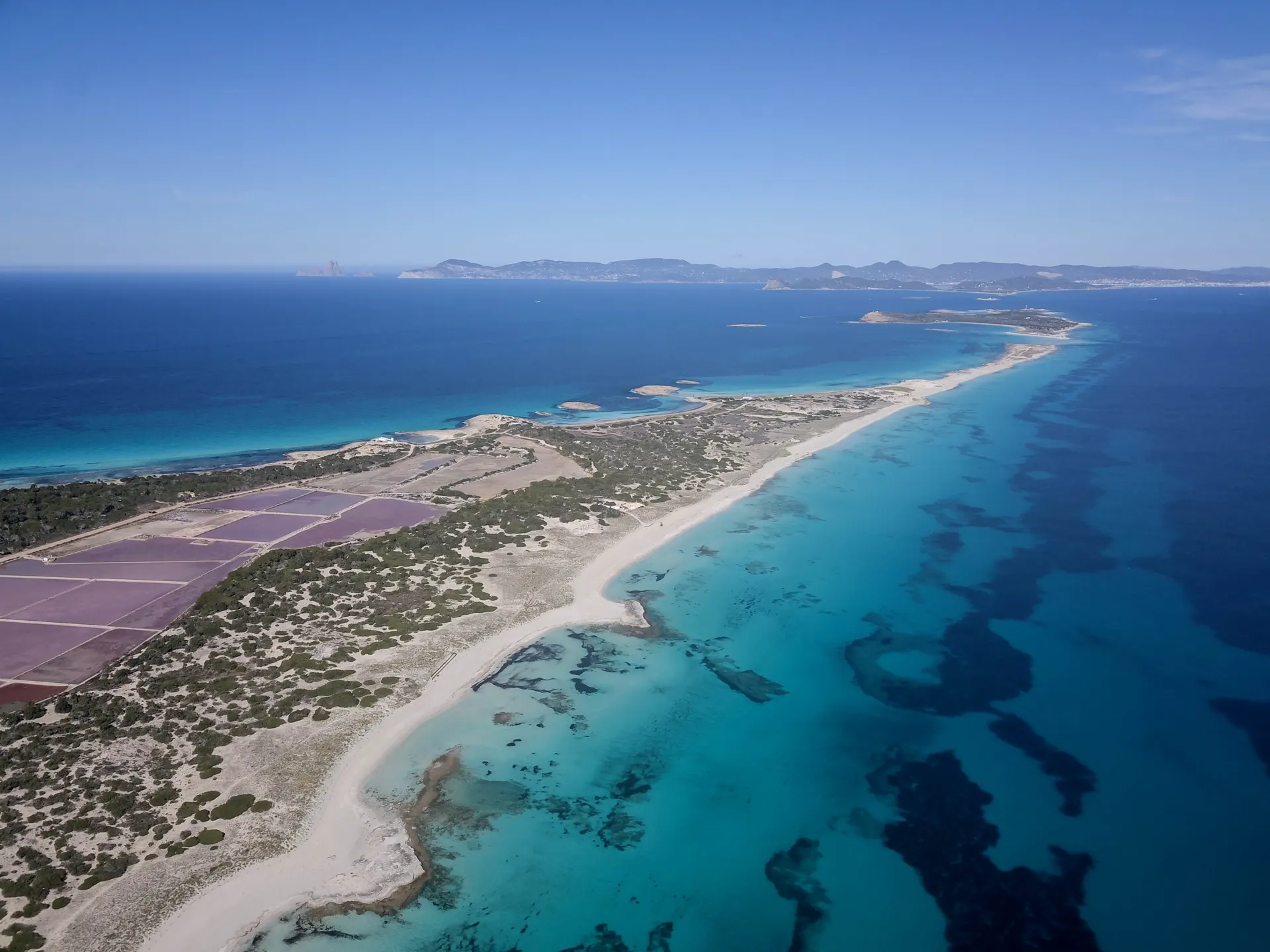
Its beaches are the whole north peninsula: Es Cavall d'en Borràs 2 km away on foot or by bicycle, then Ses Illetes, Platja de Llevant and Platja des Trucadors inside the natural park, and Platja de s'Alga on S'Espalmador by the daily boats. Estany des Peix and Ses Pedreres are the two swimming spots beside the port. Every bus line starts here.
Sant Francesc Xavier, the capital
Sant Francesc Xavier is the island's capital, a few kilometres inland, where the Consell Insular faces the parish church completed in 1738 and built as a fortress with an iron-plated door. The town has the widest choice of shops, the exhibition halls, the cinema, library, swimming pool and sports centre, and the Sa Tanca Vella chapel, open Tuesday to Saturday from 10 am to 2 pm.
Sant Francesc has two markets: craft stalls in the streets from May to October, and a flea market with second-hand clothes and books on Tuesday and Saturday mornings in the Jardí de ses Eres behind the church. There is also the Mercat Pagès at the Centre Antoni Tur "Gabrielet", where island farmers sell fruit, vegetables, honey, wine and fish directly. The festivities of Sant Francesc are on 3 December. Its beaches are Cala Saona, 5 km to the south-west on bus line L5, and the western sections of Platja de Migjorn, Es Ca Marí and Es Còdol Foradat. Bus lines L1, L2 and L5 stop in the town.
Sant Ferran de ses Roques, the crossroads
Sant Ferran de ses Roques sits in the middle of the island where the roads from the port, the capital, Es Pujols and La Mola meet, with the main road as its southern boundary. Its church, inaugurated in 1889, is the smallest of the three parish churches, and Fonda Pepe, where hippies gathered in the 1970s, is still open.
Sant Ferran keeps a full calendar: the craft and art markets on the main street on Thursday, Friday and Saturday from 20:00 to midnight (in 2026 from 30 May to 26 September), concerts in the square on Friday evenings, and the Guitar Festival in September. Its beaches are on the north coast: the rocky cove of Cala en Baster 3.1 km away and Platja de Tramuntana, or Es Carnatge, beyond it. Lines L1, L2, L5 and L7 all stop here, which makes it the best-connected town on the island.
Es Pujols, the resort
Es Pujols is the one place built around tourism, on the north coast between the Es Trucadors peninsula and Punta Prima. Es Pujols has a wide choice of hotels, restaurants from local to international with terraces over the sea, pubs and bars in the inner streets, a small discotheque and shops focused on summer fashion. The flea market fills the seafront promenade on summer evenings and nights with more than 40 stalls.
Platja des Pujols, 690 m of sand directly in front of the promenade, is the town beach, with Platja de ses Canyes 549 m away and Sa Roqueta just over a kilometre along the coast. Lines L1, L2, L5 and L7 stop in the town, L1 and L7 at the beach, and the Bus Turístic L3 blue route at Platja Es Pujols.
El Pilar de la Mola, the plateau
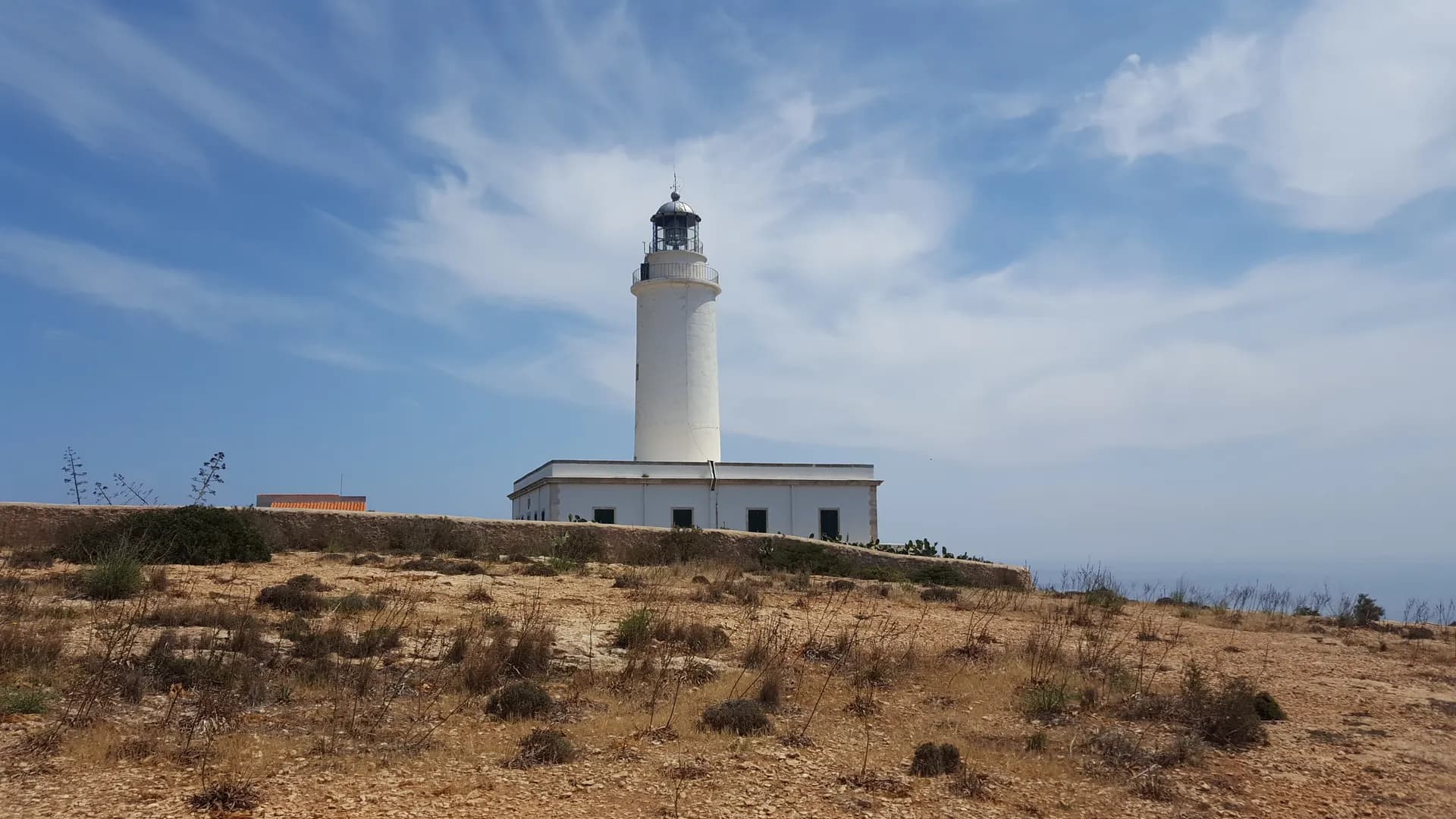
El Pilar de la Mola is the town on the high eastern plateau, reached by the main road climbing more than 100 m, the most isolated town on the island and, in summer, a different world from the rest of it. Its 18th century church stands at the end of the town, the road ends a few kilometres on at the Far de la Mola lighthouse, and green route 32, more than 12 km long, is the longest on the island.
The craft market, founded in 1984, runs every Wednesday and Sunday afternoon from May to October with live music, and everything sold is handmade on Formentera. The Festes del Pilar run from 5 September to 26 October 2026 and the BTT La Mola mountain bike race on 31 October and 1 November. Its beaches lie below the cliffs: Es Arenals and Es Copinar, the eastern sections of Platja de Migjorn, 4.8 km by road, and the walk-in cove of Es Caló des Mort. Only line L2 serves the town, continuing to the lighthouse.
Es Caló de Sant Agustí, the harbour
Es Caló de Sant Agustí is a small fishing hamlet on the north coast at the foot of the climb to La Mola, the only settlement on the Tramuntana shore. Its natural harbour is ringed by wooden boathouses declared a site of cultural interest in 2002, and the hamlet is known for its traditional fish restaurants. Green route 25, the Camí de sa Pujada, climbs from here to La Mola with the best views on the island.
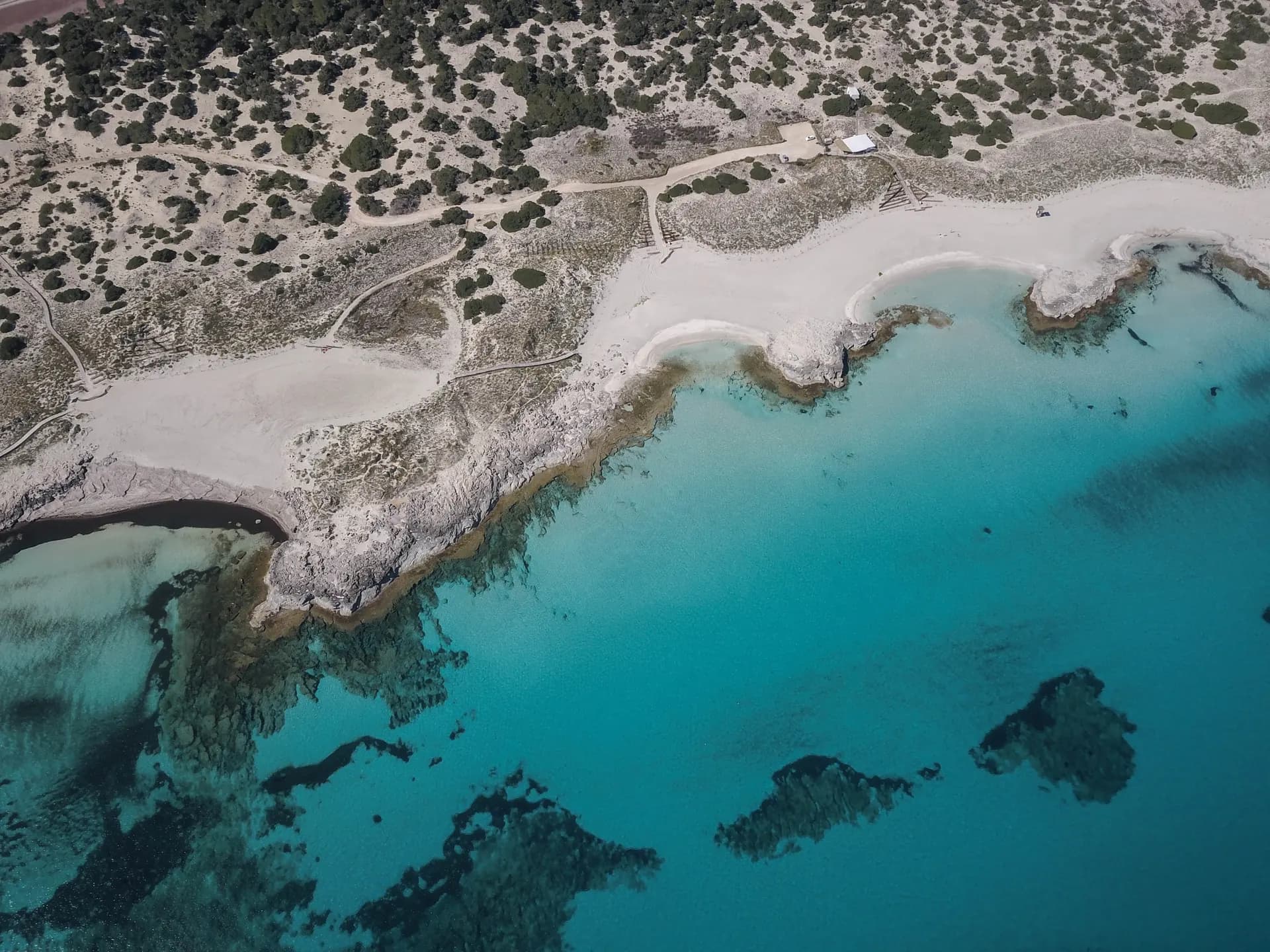
Its beaches are Platja des Caló beside the harbour and the three coves of Ses Platgetes 125 m to the west. Lines L2 and L7 stop at Es Caló Sant Agustí and at Platja Es Caló, and a car park in the hamlet serves both beaches.
Every market's days, hours and season are in the markets guide.
Getting between the towns by bus
All lines start at Port La Savina on the timetable in force from 1 May 2026, daily, with a short trip at 2.25 EUR, a long trip at 3.20 EUR and a day pass at 15 EUR.
- L1: Port La Savina, Sant Francesc Xavier, Sant Ferran de ses Roques, Es Pujols, returning past Ses Salines and Sa Roqueta, roughly every 45 minutes from 07:15 to 21:30.
- L2: Port La Savina, Sant Francesc Xavier, Sant Ferran de ses Roques, Es Pujols on some runs, Ca Marí, Es Caló, Es Copinar, El Pilar de la Mola and the Far de la Mola, hourly from 07:20 to 23:20.
- L5: Port La Savina, Sant Francesc Xavier and Cala Saona.
- L7: Port La Savina, Sa Roqueta, Es Pujols, Sant Ferran de ses Roques, Ca Marí, Es Caló and Es Copinar, with runs to Platja Illetes, five to six times a day.
- L3 Bus Turístic: Port La Savina to Ses Illetes (yellow route) and on to Platja Es Pujols (blue route); from 15 October 2026 it costs 10 and 15 EUR return.
Where to base yourself
- Arriving late or leaving early: La Savina, where the ferry, the rental offices and every bus line are a few minutes apart, with Es Cavall d'en Borràs 2 km away on foot.
- Shops, services and errands: Sant Francesc Xavier, the only town with a cinema, library, pool and the full run of boutiques, and the start of line L5 to Cala Saona.
- Buses in every direction: Sant Ferran de ses Roques, the one stop on L1, L2, L5 and L7, with the evening markets on its main street.
- Hotels, restaurants and nightlife on foot: Es Pujols, the only town with a beach in front of the promenade.
- Quiet: El Pilar de la Mola, with the lighthouse, the longest green route and only the L2.
- Fish lunches and small coves: Es Caló de Sant Agustí, on L2 and L7, with Ses Platgetes next door and the Camí de sa Pujada above.