
Formentera has no airport, so every visit starts with a boat. Once there, the island's year is set less by the weather than by a few official dates: the natural park vehicle control, the island-wide driving authorisation, the market months and the bus timetable. This guide puts those dates next to the climate normals so you can pick a season on facts.
The climate in numbers
The nearest station with published climate normals is Ibiza airport, 6 m above sea level, across the strait from La Savina. The figures below are the standard climate values for the period 1981 to 2010: mean temperature, mean daily maximum and minimum, rainfall, days with 1 mm or more, and hours of sunshine.
- January: 11.9 °C mean (15.7 max, 8.1 min), 37 mm over 4.9 rainy days, 162 hours of sun.
- February: 12.1 °C (15.9, 8.3), 36 mm over 5.0 days, 166 hours.
- March: 13.7 °C (17.7, 9.6), 27 mm over 3.3 days, 211 hours.
- April: 15.6 °C (19.7, 11.4), 31 mm over 4.1 days, 246 hours.
- May: 18.6 °C (22.7, 14.6), 27 mm over 3.2 days, 272 hours.
- June: 22.6 °C (26.8, 18.4), 11 mm over 1.4 days, 299 hours.
- July: 25.6 °C (29.7, 21.4), 5 mm over 0.5 days, 334 hours.
- August: 26.3 °C (30.3, 22.2), 18 mm over 1.5 days, 305 hours.
- September: 23.8 °C (27.7, 19.9), 57 mm over 4.2 days, 236 hours.
- October: 20.2 °C (24.0, 16.5), 58 mm over 5.6 days, 205 hours.
- November: 15.9 °C (19.6, 12.3), 53 mm over 5.6 days, 157 hours.
- December: 13.1 °C (16.7, 9.5), 52 mm over 5.4 days, 151 hours.
The annual mean is 18.3 °C with 413 mm of rain. July has the most cloudless days (15.9) and September the most stormy days (3.1).
The sea temperature by month
The sea warms and cools a month or two behind the air. These are the average sea surface temperatures around Formentera over 2023 to 2025:
| Month | Sea | Month | Sea |
|---|---|---|---|
| January | 15.9 °C | July | 26.9 °C |
| February | 15.1 °C | August | 27.6 °C |
| March | 15.5 °C | September | 26.4 °C |
| April | 17.1 °C | October | 23.3 °C |
| May | 19.8 °C | November | 20.0 °C |
| June | 23.7 °C | December | 17.6 °C |
The sea is above 23 °C from June to October and at its coldest in February and March. September is as warm in the water as July, with fewer people; it is also the month of the first autumn rain. For today's sea temperature, see the weather page.
How the seasons are defined
Three official calendars mark the year. The Consell's natural park access control at Ses Illetes, Platja de Llevant and Es Cavall d'en Borràs runs from 10 May to 15 October 2026, with three fee bands: 5 EUR a day for a non-resident car (3 EUR a motorbike) from 10 May to 15 June and from 16 September to 15 October, 6 and 4 EUR from 16 June to 15 July and from 1 to 15 September, 7 and 5 EUR from 16 July to 31 August. The car parks are capped at 384 cars and 1,132 motorbikes. The island-wide scheme at Formentera.eco requires an authorisation to drive on Formentera from 1 June to 30 September; the 2026 season closed on 30 September and the portal reopens on 20 April 2027. The vehicle restriction on the roads to Es Caló des Mort runs from 15 May to 15 October 2026. Put together, the year splits as follows.
- Peak: 16 July to 31 August. Top fee band, driving authorisation in force, the warmest and sunniest weeks in the normals.
- High: 1 June to 15 July and 1 to 30 September. Middle fee band, authorisation in force.
- Shoulder: 10 May to 31 May and 1 to 15 October. Lowest fee band, no driving authorisation, markets and summer bus timetable running.
- Low: 16 October to 9 May. No park control, no authorisation, markets closed.
Peak season, 16 July to 31 August
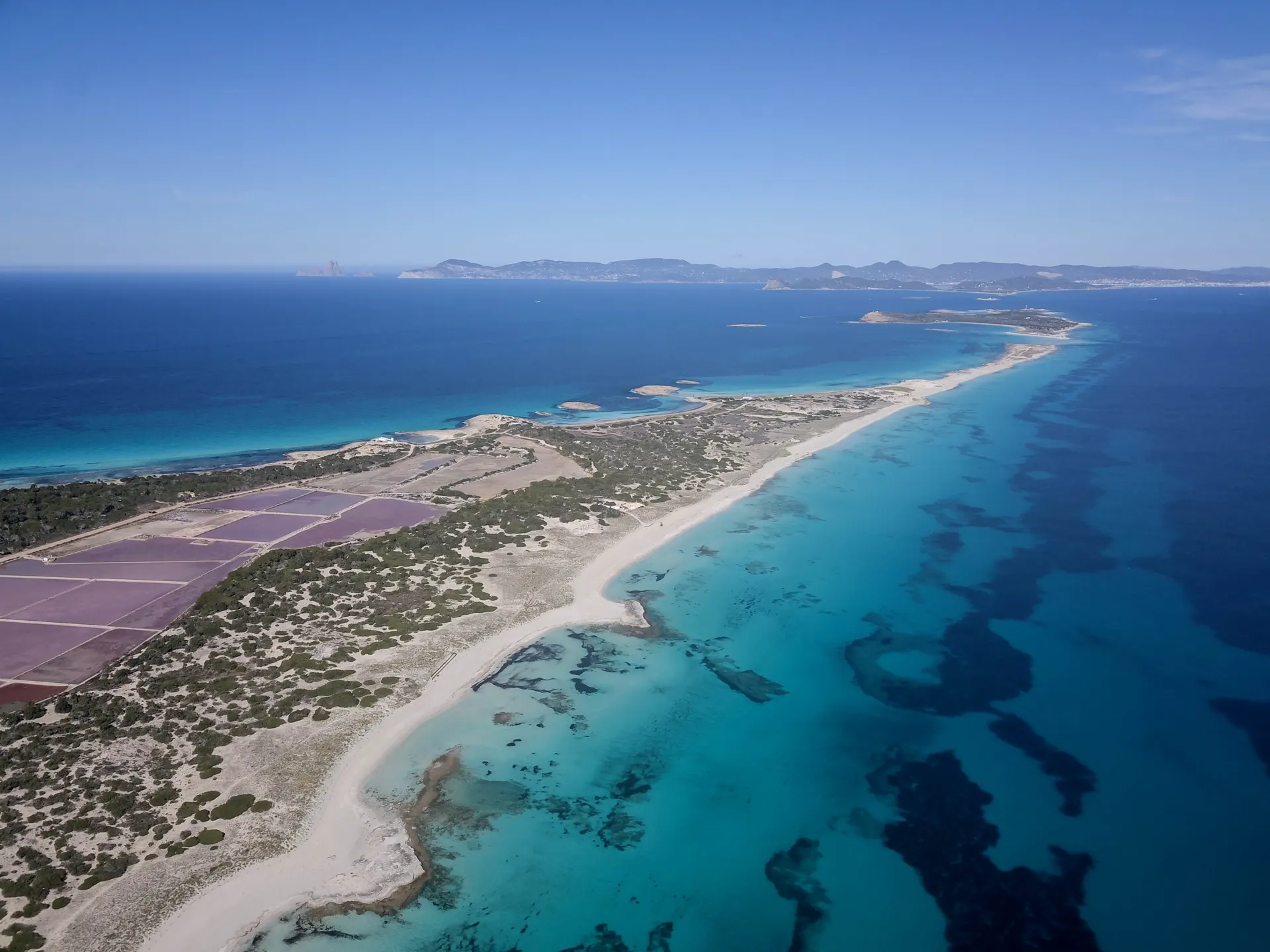
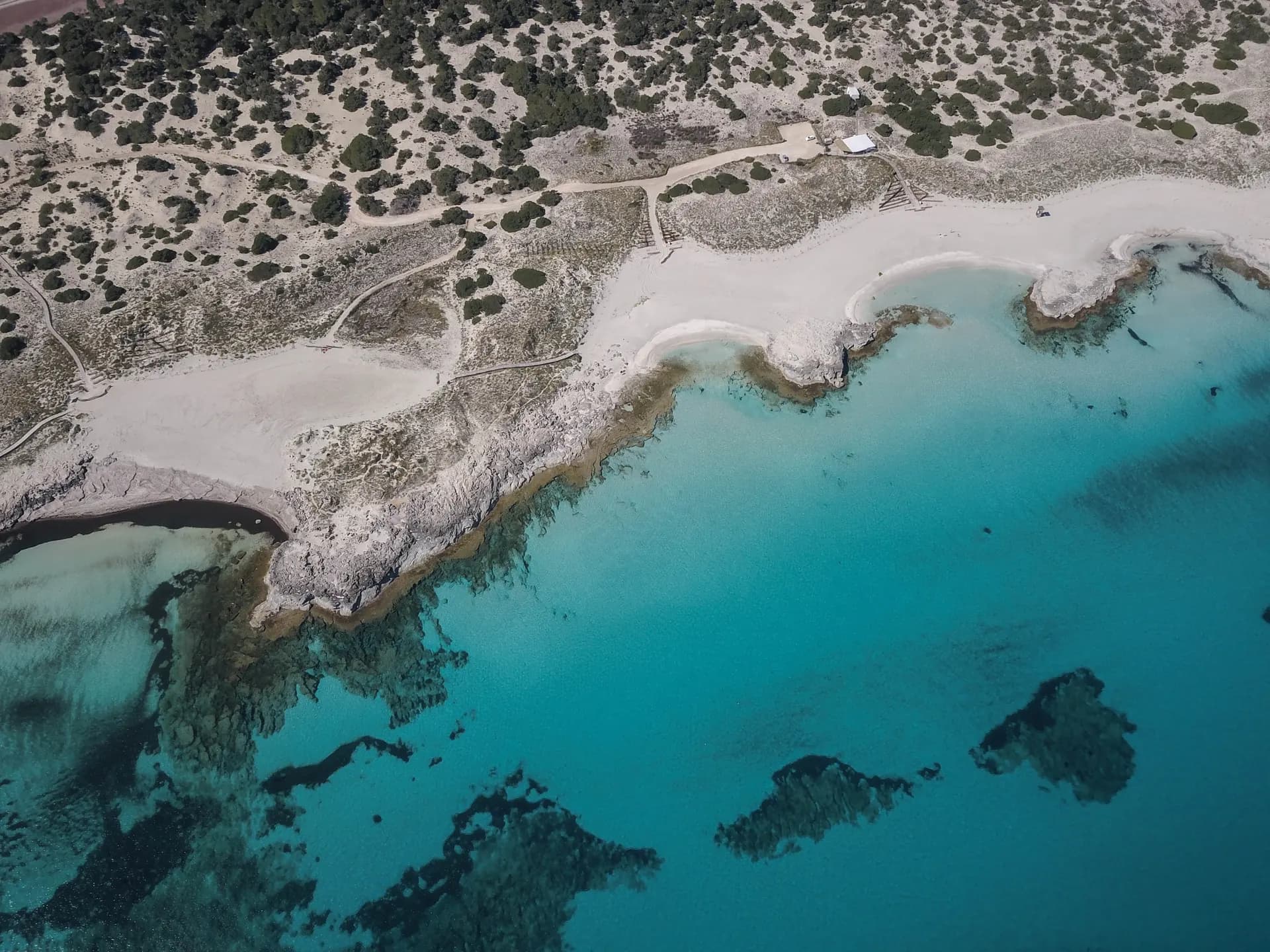
In summer the port of La Savina has a constant coming and going of people, and the calm of El Pilar de la Mola is a different world from the bustle of the rest of the island. Occupancy is high at Ses Illetes, Platja de Llevant, Cala Saona, Es Arenals, Platja des Pujols, Platja des Caló and Es Caló des Mort, and low at Sa Roqueta, Platja de ses Canyes, Cala en Baster, Platja de Tramuntana and Ses Platgetes, so the quiet shores exist; they are the rockier ones. The park car parks are capped at 384 cars, so space is the limit rather than the fee, and the Es Copinar car park doubles as the car park for Es Caló des Mort.
High season, June to mid July and September
The normals give June 26.8 °C maxima, 299 hours of sun and 11 mm of rain; September has 27.7 °C, 236 hours, the first autumn rain (57 mm) and the most stormy days of the year. The park fee drops to 6 EUR, the driving authorisation still applies, and every market is open. Sant Ferran de ses Roques holds its Guitar Festival in September, two nights of live music, and the Festes del Pilar in El Pilar de la Mola run into October.
Shoulder season, May and early October
The regular bus timetable in force from 1 May 2026 runs daily on lines L1, L2 and L7, with fares of 2.25 EUR for a short trip, 3.20 EUR for a long one and 15 EUR for a day pass. The park control starts on 10 May at the lowest band and ends on 15 October, the same day the Bus Turístic L3 timetable and prices published for 15 October onwards take effect: 10 EUR return to Ses Illetes and 15 EUR for the route that adds Platja des Pujols. The craft market of El Pilar de la Mola runs Wednesday and Sunday afternoons from May to October, the Sant Ferran de ses Roques craft and art markets on Thursday, Friday and Saturday evenings from the end of May to the end of September, and the craft stalls of Sant Francesc Xavier from May to October. May has 22.7 °C maxima and 27 mm of rain; October 24.0 °C and 58 mm, the wettest month in the normals. The Gastronomic Weeks run from 12 to 25 October 2026.
Low season, mid October to early May
The ferry from Ibiza has frequent sailings all year round, and the direct mainland connection exists only in season; bad weather can exceptionally interrupt the ferries, especially in the winter months. There is no park fee, no driving authorisation and no market calendar. Ses Illetes and Platja de Llevant are the beaches for long walks in the colder months. The BTT La Mola mountain bike race is on 31 October and 1 November and the festivities of Sant Francesc on 3 December.
What each season suits
- Families: Ses Illetes, Es Cavall d'en Borràs, Cala Saona, Platja de Migjorn and Platja des Pujols are safe for children, and Estany des Peix suits an afternoon with small ones. June and September pair those beaches with the middle fee band and 27 °C afternoons.
- Swimming: July and August have the warmest air and the least rain; the south coast is usually sheltered from the prevailing summer winds, so Platja de Migjorn is the fallback on a Tramuntana day.
- Cycling: the bike and the bus are the best way to get around, and the terrain is flat except for the climb to La Mola. The normals make April, May and October the months with 20 to 24 °C maxima and 205 to 272 hours of sun.
- Quiet: outside 10 May to 15 October the park car parks are free and uncapped, and Ses Platgetes, Cala en Baster and Platja de Tramuntana are rated low occupancy even in summer.
Booking and ferries
Formentera Lines runs a 30-minute fast ferry between Ibiza and La Savina, and Aquabus has departures from both ports throughout the day. If you want to drive between 1 June and 30 September, apply for the authorisation at Formentera.eco before you book the vehicle crossing.