
Formentera is small, dry and protected: about 11,700 people live on the island all year, and in summer the population passes 44,000. Most of what makes it worth the ferry, the clear water, the empty dunes, the quiet villages, depends on visitors treating it as the islanders do. None of this is complicated.
Water comes from the sea
All the water supplied on Formentera, in the towns and in the countryside, is desalinated, by one plant with a capacity of 5,000 cubic metres a day. Every shower and every pool top-up is seawater that has been made drinkable. Keep showers short, reuse towels, and refill a bottle rather than buying several.
Book a legal holiday rental
A home let to tourists must be registered in the Consell de Formentera's tourism register.
- Ask for the registration number before you pay, and be wary of a listing without one.
- The Consell fines illegal rentals. In one case in 2025 the fine was 30,000 euros, and it runs an anonymous channel to report them.
The sea: Posidonia and anchoring
The meadows of Posidonia oceanica keep the water clear and the sand on the beaches. Anchoring on Posidonia is banned across the Balearic Islands; boats anchor on sand or use a buoy. The anchoring guide has the zones, the buoy fields and the fines.
The dunes and the natural park
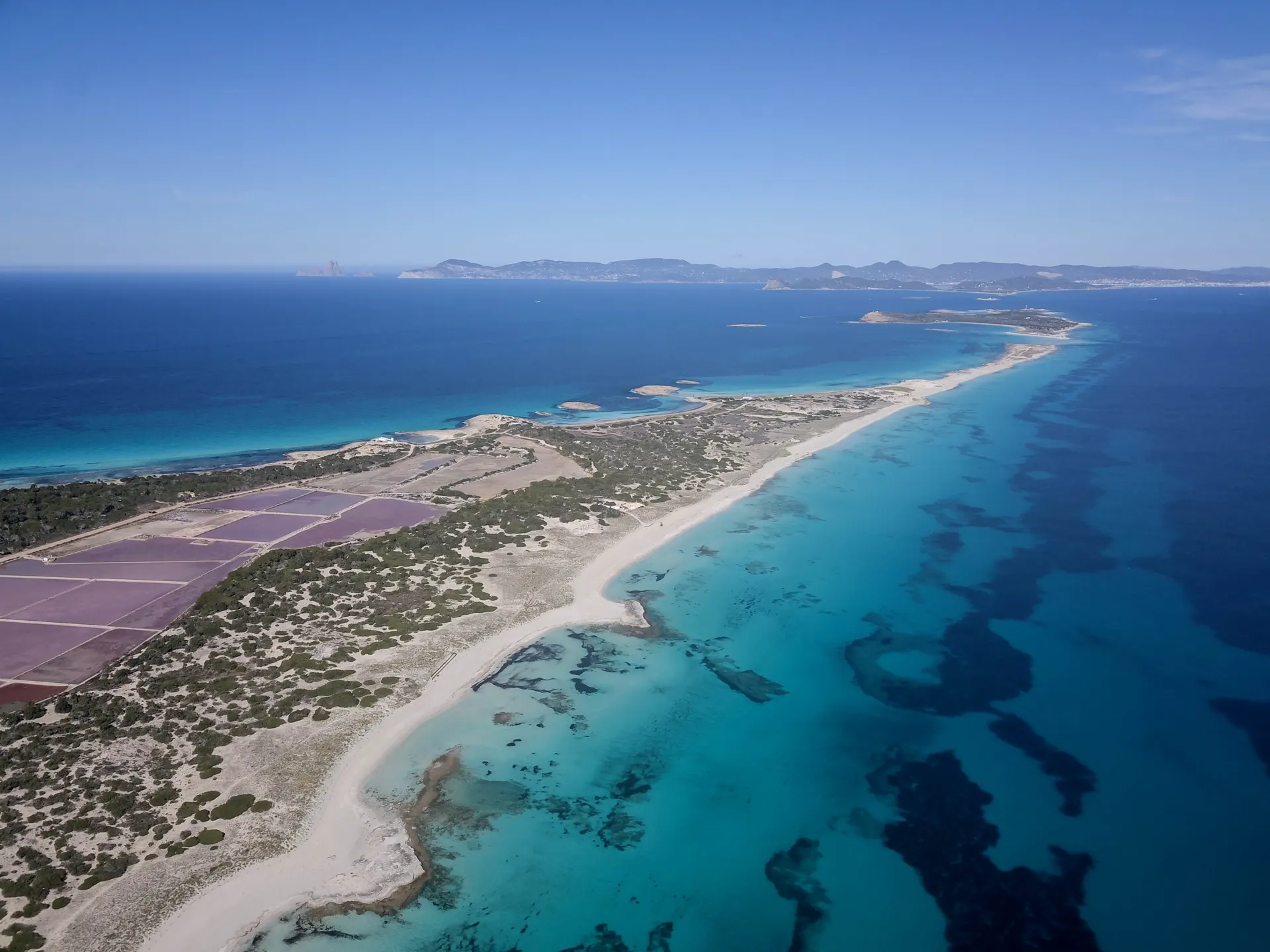
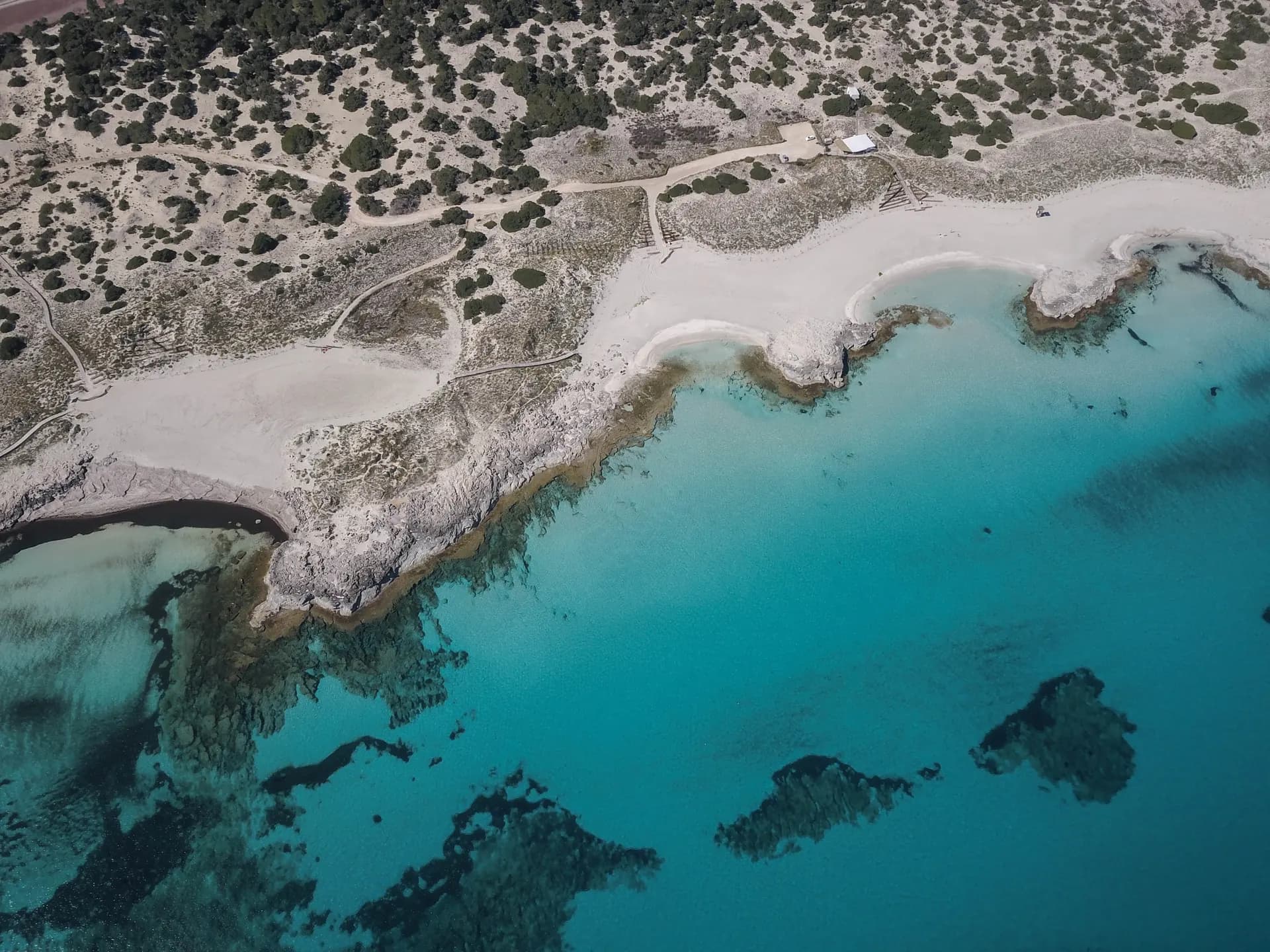
The north of the island and S'Espalmador belong to the Ses Salines natural park. Behind Ses Illetes and Platja de Llevant the dunes are crossed by footbridges built to stop their erosion: keep to the footbridges and signed paths. On S'Espalmador landing is allowed only through the entry and exit channels, and dogs, camping, overnight stays and mud baths in the lagoon are prohibited.
No camping, no nights in a van
Camping is banned across the whole island, including sleeping in a caravan, motorhome or van, and there is no authorised camping area. The fine is 300 euros. The driving and parking guide has the vehicle rules.
Dry stone walls
The fields of Formentera are divided by dry stone walls, parets seques in Catalan, a craft UNESCO lists as intangible cultural heritage. Do not climb them or take stones, and close any gate you open.
A few words of Catalan
Formentera speaks Catalan, in its local form, alongside Spanish. A few words go a long way:
| Catalan | English |
|---|---|
| Bon dia | Good morning |
| Bona tarda | Good afternoon |
| Bon vespre | Good evening |
| Gràcies | Thank you |
| Si us plau | Please |
| Adéu | Goodbye |
Come outside August
The island is busiest from mid July to the end of August. May, June, September and early October have the markets, the buses and warm sea with fewer people; the when to visit guide has the dates.